Emma Landis
Team lead
 NASA ASCENDPhoenix College · Student-built flight researchRecorded site views
Phoenix College · NASA ASCEND
ANSR-163/164 · ASCEND! 61/62
Eight students bringing together mechanical design, electronics and software for the next high-altitude balloon flight.
This semester’s work spans payload fabrication, flight software, atmospheric observations and onboard video, with support from faculty mentors and advisors.
Explore the Fall mission →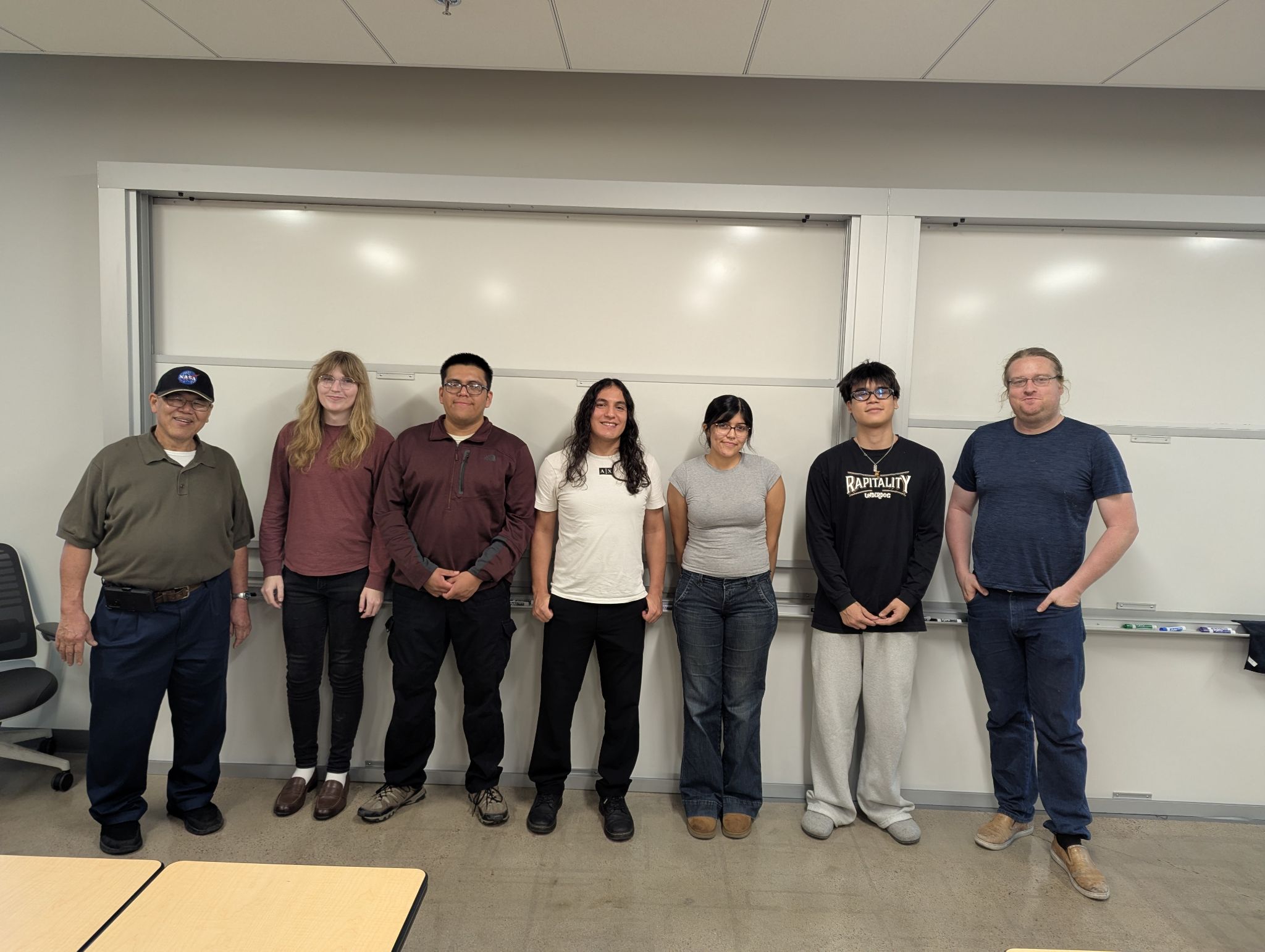
Team lead
Mechanical
Mechanical
Electrical
Electrical / Software
Electrical
Mechanical
Software
Science advisor
Engineering mentor
Fall 2026 · Mission preparation
The semester presentation brings together the team’s build and integration work ahead of the November 14 launch.
Documentation and inventory organization support the work across all four areas.
Open the flight tracker →The Spring 2026 archive brings together the team's authored flight figures, atmospheric research presentation, radiation profile and onboard footage. The original figures—not fitted substitute curves— lead the science record.
Replay the recorded March 28 flight in 3D, then explore the team's authored trajectory, altitude profile and research presentation. The APRS replay uses recorded positions; it is not synchronized with the science instruments. Raw science records remain private.
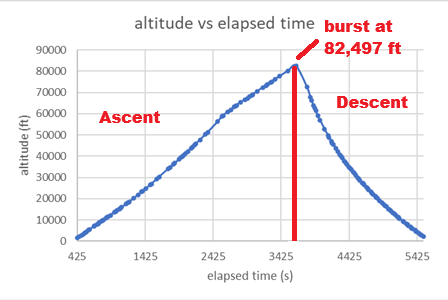
The team reports an 82,497-ft flight maximum, an external-temperature minimum of −66.5 °C and a high-altitude CO₂ peak of 939 ppm at 77,483 ft. These values belong to the supplied Spring 2026 report, not the older fitted-altitude summary.
The presentation preserves instrument behavior and the team's annotations. Interpretation notes separate observations, source-label conflicts and proposed follow-up studies.
Explore the Spring 2026 research figures →Watch the team-supplied launch, ascent, horizon and balloon-burst clips individually. These are short excerpts, not a complete flight recording or footage synchronized to instrument measurements. Each duration describes the clip, not the length of its flight phase.
8.82 seconds. The camera clears the release team as the payload leaves the ground.
20.50 seconds. The balloon, suspension lines and payload hardware remain in view during the climb.
8.73 seconds. Terrain and the horizon fill the onboard camera's high-altitude view.
6.80 seconds. The balloon envelope bursts as the recorded ascent transitions toward descent.
| Reported maximum descent | 63.6 mph · reached after 5.42 min of descent |
|---|---|
| Reported ground impact speed | 15.1 mph · not a terminal-velocity estimate |
| Reported burst acceleration | 6.2 G |
| Reported pressure minimum | 49.2 Torr |
| Pfotzer–Regener radiation marker | Approximately 63,300 ft · report marker |
| High-altitude CO₂ peak | 939 ppm at 77,483 ft · reported sensor reading |
| Lower-altitude CO₂ peak | 623 ppm at 10,879 ft · reported sensor reading |
| Descent relative humidity maximum | 72% · report attributes the rise during descent to condensation, not a recovery measurement |
Choose the published trajectory, research presentation or onboard footage. Private telemetry files are not distributed.
Inspect the hardware, compare design choices and test your own mass and energy assumptions.