
Radiation above the desert.
Explore the college’s published Spring research result, meet its named student team, and watch the official April ascent footage. Each record below links to its source.
Explore this year’s flight record
- Playback
- April 1 · Ascent segment 9/9
- Data
- Published radiation finding
- Media
- Official 360° ascent footage
Explore the recorded April view and the college-published research result. Video playback and the reported radiation finding are separate source products.
April 1, 2023 · Ascent 9/9
Look around this recorded ascent segment using the player’s 360° controls. The team channel labels it Ascent 9/9; it is not the complete flight. The footage and the college’s published radiation finding are distinct records.
Watch on YouTube ↗YouTube connects only when you choose to load the film.
The flight, the instruments, the team
The team's original display brings together the carbon-composite payload, stabilized camera system, Geiger instruments and flight performance. Its flight maximum and radiation maximum describe different events.
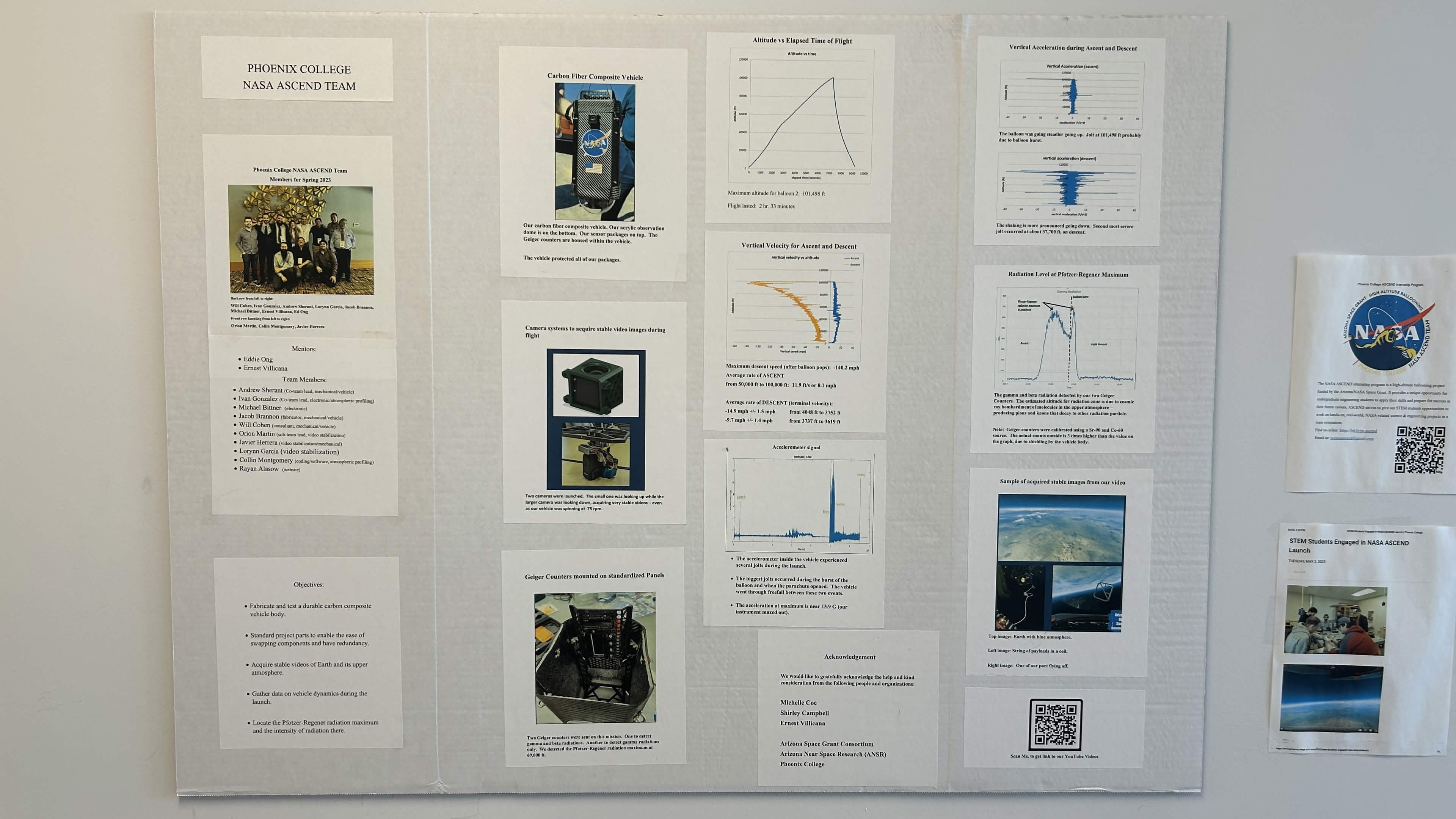
Spring 2023 research presentation
The display is framed to the research board. The neighboring retired combined logo is outside this view. Labels, axes and the team's original presentation remain intact.
Radiation maximum
Phoenix College reported this result on May 2, 2023. Open the article to inspect the original radiation plot alongside the published finding.
Read the finding and original plot ↗April ascent 9/9 · 360° VR
Explore the recorded view on the official team channel. Video time is not synchronized to a GPS track here.
Watch ascent segment 9/9 ↗Team named by the college
May 2023 article. Names follow that source; this is not a separate attendance list for each flight.
- Ivan Gonzalez
- Andrew Sherant
- Orion Martin
- Jacob Brannon
- Collin Montgomery
- Javier Herrera
- Javier Chacon
- Jasmin Lopez
- Lorynn Garcia
- Michael Bittner
- Rayan Alasow
Faculty mentors: Eddie Ong and Ernest Villicaña.
College team record ↗Questions for a reanalysis
Suggested analysis, not additional 2023 findings:
- Align detector samples and altitude by timestamp. Document clock offsets before pairing observations.
- Compare ascent and descent in the same altitude bins, retaining sample counts and time coverage.
- Report the uncertainty around a peak instead of selecting only the largest sample.
- Keep detector response, calibration and missing intervals beside any new plot.
Students and mentors together
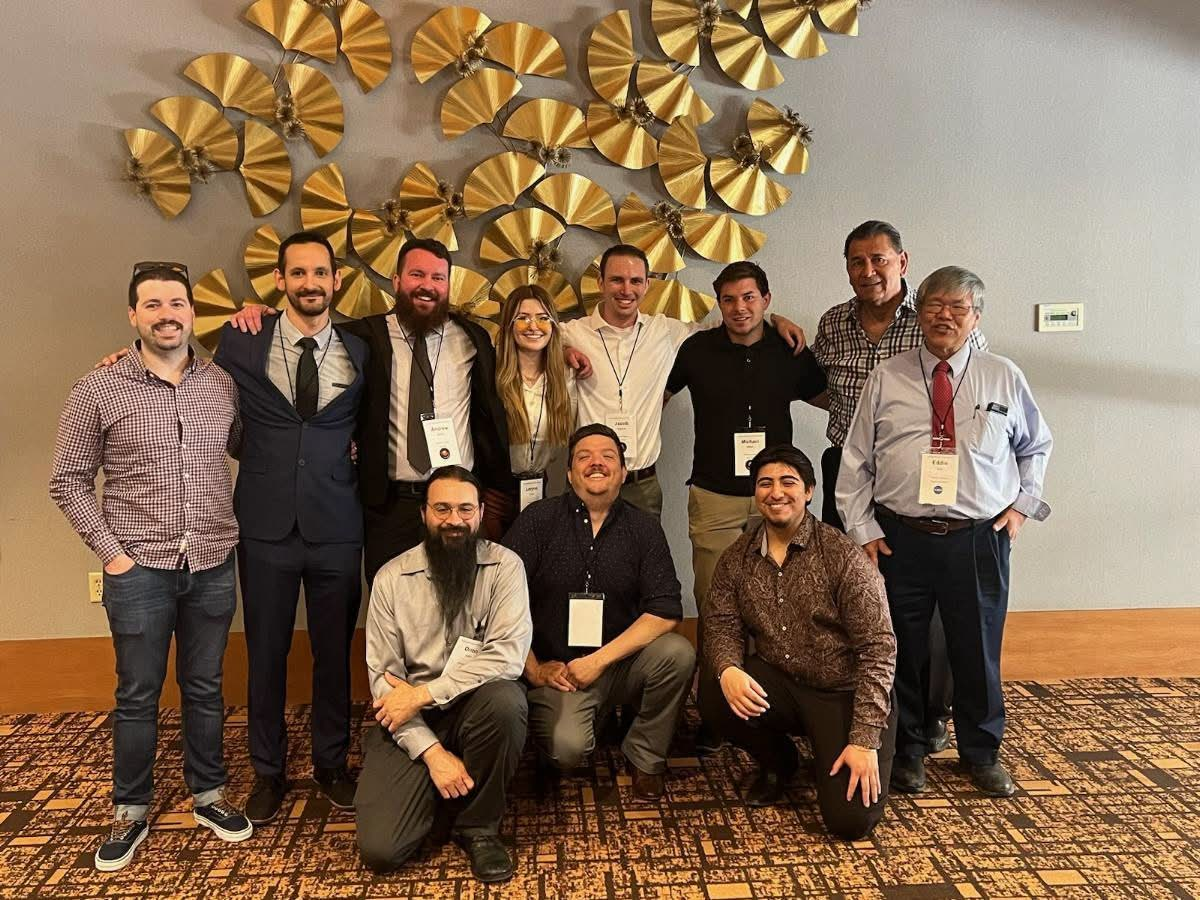
Spring 2023 · Caption supplied by Dr. Ong
Kneeling, left to right: Orion Martin, Collin Montgomery, Javier Herrera.
Standing, left to right: Will Cohen, Ivan Gonzalez, Andrew Sherant, Lorynn Garcia, Jacob Brannon, Javier Chacon, Ernest Villicana, Ed Ong.
The supplied photograph caption is kept separate from the college article's broader student list above.
Faculty mentors: Dr. Eddie Ong and Ernest Villicaña (Mr V).
Explore the Spring 2023 team photograph →